Assistant Fire Management Officer
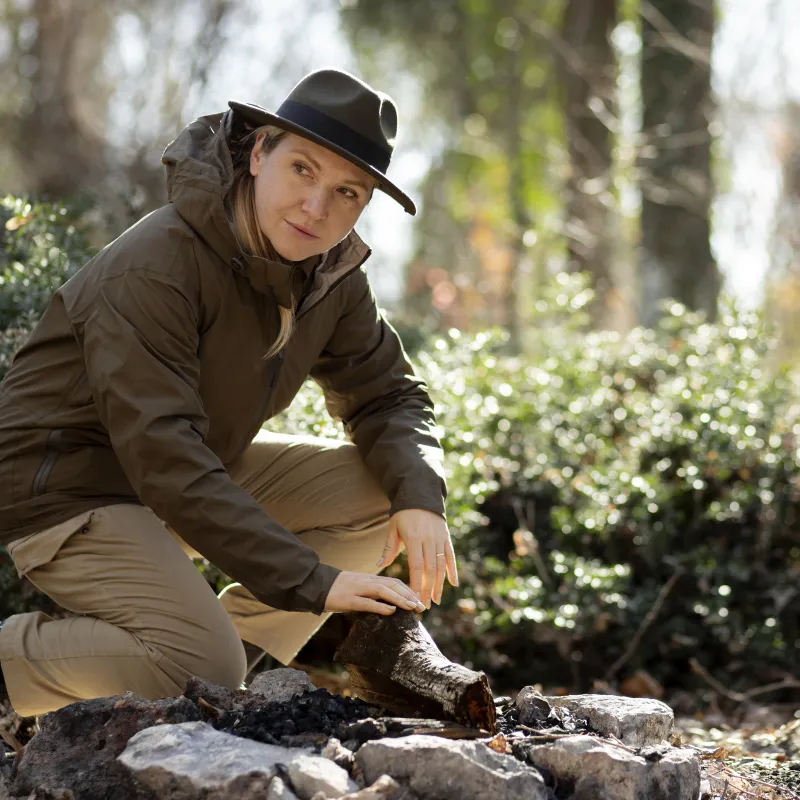
Assistant Fire Management Officers (AFMOs) make significant contributions to the overall natural resource conservation master plans. They work with the fire management team from their agency to identify where the greatest threats to life and infrastructure are and design operational plans to mitigate those threats, such as prescribed burns, forest thinning, or a rapid response plan for an emergency. They also work alongside the biology department to determine how strategic use of fire—whether through prescribed burns or managing natural-start fires—may positively affect habitat space for animals. AFMOs also frequently lend their firefighters to other conservation projects, such as trail building, when not assigned to a fire.
A Day in the Job
The duties of this job vary widely depending on whether the fire season is active or not. During the season, an AFMO will report to active forest fires in a leadership role. On a large fire, an AFMO may supervise an entire section of the fire, work in the Incident Command Center to determine strategy, or fly in helicopters or planes to analyze the fire behavior. On a smaller fire, he or she may be in charge of the entire incident, directing all of the operations until the fire is out. When an AFMO is not on a fire during the active season, they supervise all the firefighters assigned to their station and oversee activities such as trainings, physical fitness activities, and maintenance of technical equipment such as fire engines and water pumps. When it is not active fire season, AFMOs help plan prescribed burns to manage forest health, and continue to take courses and trainings to qualify for regional Fire Management Officer positions or other high-level opportunities such as Fire Investigator.
Work Takes Place
Skills
Career Category
Qualifications
Expert knowledge and in some cases certifications in fire behavior, management, and air operations.
Potential Employers
Federal Government Agencies
State Government Agencies
Local Government Agencies
A Day in the Life
Meet a Wildland Firefighter
What if your future career challenged you physically and mentally, gave you opportunities to travel and work in incredible places, and allowed you to protect communities and natural landscapes when they need help the most? Kent Maxwell, founder of Colorado Firecamp, shares how a volunteer firefighter experience at age 20 completely changed the direction of his life and eventually led him to create a nationally recognized wildland firefighter training program. Learn more about Kent's career journey and what it's like to be a Wildland Firefighter in his presentation at the Green Pathways: Careers That Matter event in 2026.